





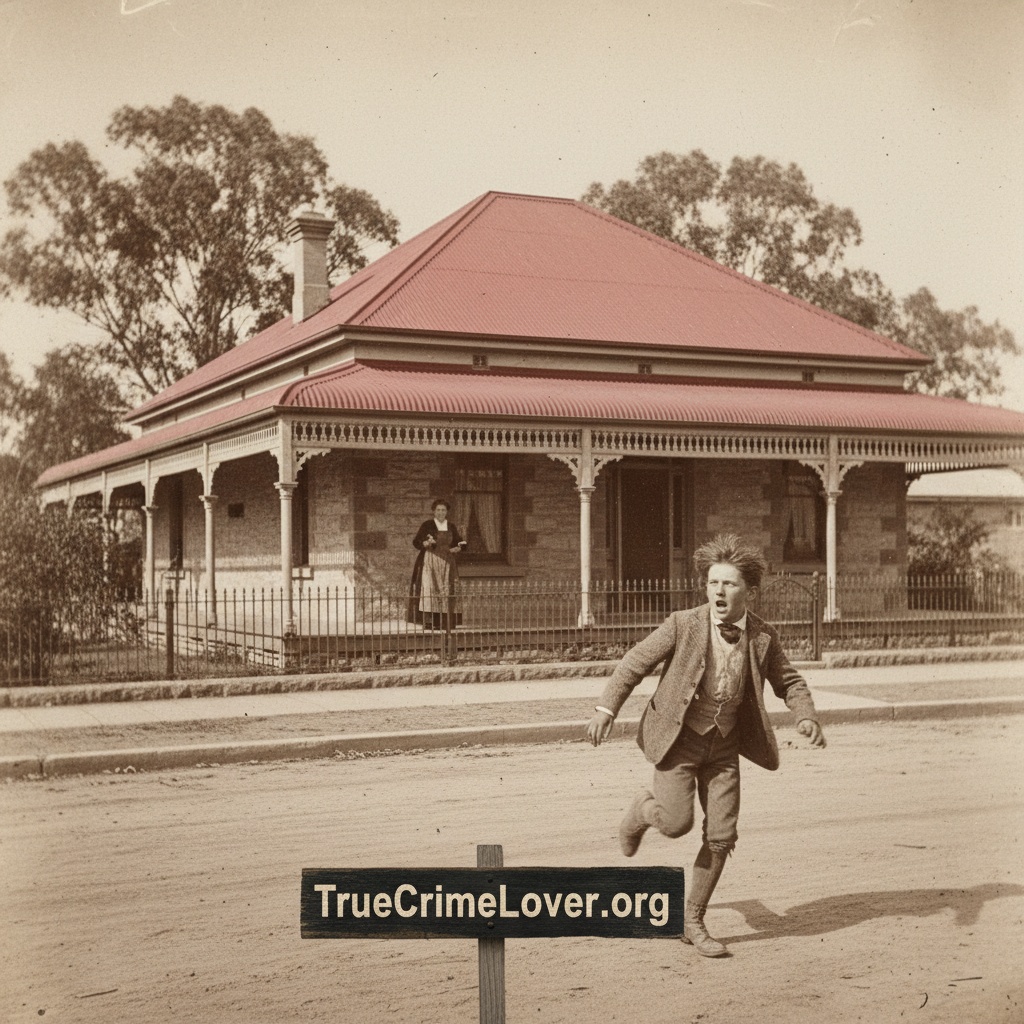
The evil stepmother Martha Rendell: One of the most cold-blooded criminals in Australian history
The dark stories of times past continue to fascinate today’s society, where true crime has become a popular genre. A particularly gruesome chapter in this history is the case of Martha Rendell, a notorious name that still echoes in the alleys of Western Australia. In the early 20th century, she was the last woman to be hanged in this region, a shocking case of horror and mistrust that caused public outrage. Martha Rendell was born on August 10, 1871, in Adelaide. She left her parents’ home at the age of 16 and subsequently had various affairs. She gave birth to three illegitimate children, whom she left behind to move to Perth, where Thomas Nicholls Morris lived. He was her great love. But there was a catch to their relationship, as Thomas was already married and had a bunch of kids, so she initially worked as his housekeeper. Eventually, the Morris’ marriage fell apart and the way was clear for Martha. In this new setup, Martha Rendell took on the role of stepmother to Morris’ four children, who were forced to call her “mother.” Over the years, the relationship between Martha and the children took a dark turn. Martha’s brutality was shocking. She beat the eldest daughter, Annie, so severely that she could no longer walk. Inspector Harry Mann, who later investigated the case, stated that Martha Rendell took perverse pleasure in watching her victims suffer. The horror began with the death of nine-year-old Annie on July 28, 1907. According to Dr. Cuthbert, the official cause of death was diphtheria. However, suspicions arose when Martha’s second victim, seven-year-old Olive, died in a similar manner shortly afterwards on October 6, 1907. But Dr. Cuthbert again issued a certificate stating the cause of death as diphtheria. It was not until a year later, on October 6, 1908, when 14-year-old Arthur died under mysterious circumstances, that Dr. Cuthbert began to have doubts about a natural cause of death. But the whole truth only came to light when 15-year-old George Morris fled his parents’ home after Martha had coated his tonsils with what she claimed was medicine. He had previously experienced severe throat pain after drinking a cup of tea made by Martha. He believed that Martha had tried to poison him. He expressed this suspicion to his biological mother, with whom he had reconnected after many years. Although she lived only a few streets away, the children had not been allowed to have any contact with their biological mother since the separation. He told his mother that he believed Martha had killed his three siblings and was now trying to kill him too. George’s mother immediately informed the police. However, Martha Rendell denied any involvement in the crimes until the end and insisted that she had treated the children for diphtheria. After the children complained of sore throats, she had rubbed medicine on their throats. However, this supposed medicine was a salt solution. This caused the throat to become so inflamed that the child was in so much pain that he could no longer eat and ultimately starved to death. It was an agonizing and, above all, slow death. Inspector Harry Mann conducted a comprehensive investigation, which ultimately led to the exhumation of the children’s bodies. During the investigation, authorities found traces of diluted hydrochloric acid on the victims’ throats—damning evidence against Martha Rendell. The trial of Martha Rendell and Thomas Morris began in September 1909. The charge of premeditated murder sparked a wave of outrage among the public. The press stylized Rendell as the “scarlet woman” and “wicked stepmother,” which permanently shaped the public’s image of her. Despite her attempts to assert her innocence, she was found guilty by the jury and sentenced to death. Thomas Morris, on the other hand, was acquitted because it could not be proven that he knew about Martha Rendell’s cruel machinations. On October 6, 1909, Martha Rendell was executed at 8:00 a.m. in Fremantle Prison in front of 25 witnesses—the largest audience ever to observe an execution at that institution. The immense attention paid to her trial and execution is a testament to the fascination and horror that this crime generated. Since her execution, numerous legends have grown up around Martha Rendell. Particularly notorious is the illusion of a face that appears on one of the prison windows when viewed from outside. This apparition, a classic case of pareidolia, is often interpreted as Rendell’s face watching over the prison—a ghostly reminder of the mischief she once spread. The case of Martha Rendell remains one of the most striking and disturbing cases in Australian history. It embodies the interplay of cruelty, naivety, and the legal system in a time that seems distant yet remains so relevant. In an era where true crime stories fill our screens and bookshelves, her story reminds us that evil is sometimes closer than we might think—hidden behind the facade of normal people. The Martha Rendell case remains a dark chapter in Australian history, showing how dangerous misplaced trust and ignorance can be. It is a warning to future generations to always remain vigilant and never underestimate the dark shadows of the past.
Share this content:







Post Comment