






Aleksandr Andreevich Rubel: The Tallinn Serial Killer
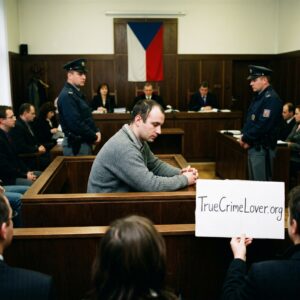
Aleksandr Andreevich Rubel, born on 25 December 1980 in Ukraine, became one of Estonia’s most notorious serial killers. His brutal crimes between 1997 and 1998 led to his conviction for six counts of murder. Convicted as a minor, he received the maximum sentence of eight years’ imprisonment, which he served at Tartu Prison until 8 June 2006. Despite his criminal record, there is speculation that he is currently living in Ukraine, whilst other sources report that he has been spotted back in Estonia under an assumed name. Rubel grew up in a difficult environment characterised by drug abuse and violence. He developed an addiction to petrol fumes, which significantly affected his mental stability and contributed to his criminal behaviour. He committed his first murders as a teenager, which further heightened public perception of his crimes. The shock caused by such a crime committed by a young man was immense within Estonian society. The series of murders began on 19 September 1997 with the first victim, Tõnu Põld, a disabled neighbour. Rubel stated that he was plagued by an overwhelming desire to kill anyone. Põld was specifically targeted because Rubel knew he was unable to defend himself. This murder laid the foundation for the brutal and emotionally raw motives behind his actions. On 7 November 1997, the second murder took place when Rubel’s father, Andrei Rubel, stabbed the guest Alexei Pavlov before Aleksandr rushed to his aid. It is believed that the father was convinced that Pavlov had been harassing his wife. Aleksandr then helped to end the life of the man, who was already seriously injured, by strangling him and throwing him out of the window. This led to his father’s conviction as an accomplice. The murders continued. Between 22 and 24 January 1998, Rubel stabbed Yevgeni Shelest to death at Stroomi Beach. On 2 February 1998, he beheaded Vladimir Ivanov with an axe after Ivanov had been asked for a cigarette. A cold-blooded act that highlighted the increasing brutality of his crimes. A few days later, on 9 February 1998, Olga Voronkova, a neighbour, fell victim to his knife. Vladimir Kinzerski was also killed in his own home between 28 February and 1 March 1998. Rubel’s last known victim was the 15-year-old girl Alice Siivas, who was killed on 4 June 1998 when Rubel slit her throat. A particularly horrific act that highlighted the extent of his cruelty. Aleksandr Rubel’s psychology is complex and multi-layered. His inhalation of petrol fumes caused him to slip into a psychotic state, which may have led to his impulsiveness and lack of empathy towards his victims. His choice of victims, who often appeared vulnerable or defenceless, points to deep-rooted issues with power and control. It is not only his violent nature that makes Rubel’s case remarkable, but also the dynamics within his family. His father’s involvement in one of his murders raises questions about the family environment that shaped Rubel. In many cases where family dynamics foster serious misconduct, such entanglements are not uncommon. Following his arrest, Rubel was classified as a juvenile due to his age and received the maximum sentence of eight years. These legal decisions were criticised by the public, as many felt that Rubel’s actions deserved a harsher punishment. On 8 June 2006, he was released from prison early, reigniting the debate about the risk of reoffending and the penal system’s ability to rehabilitate dangerous individuals. The debate over protecting society from potential returnees who have committed violent crimes is particularly lively in Estonia. Some citizens expressed concerns that Rubel, even if he were to live under a different name, could still pose a threat. Despite the psychiatric treatment he may have received in prison, it remains questionable whether someone with Rubel’s background can be fully rehabilitated. Rubel’s whereabouts following his release remain unclear. Reports suggest he has been frequently seen in Ukraine, whilst others claim he is living in Estonia under a different name. This uncertainty is fuelling public fears and calls for greater transparency in dealing with former offenders, particularly those who have committed serious crimes. The mystery surrounding Aleksandr Rubel persists. Fears about a possible recurrence of his violent acts and the question of whether he has in fact been rehabilitated continue to preoccupy society. Aleksandr Andreevich Rubel is not only an example of the depths to which human violence can descend, but also of the challenges faced by the legal system in dealing with juvenile offenders. His murders are a harrowing chapter in Estonian history, raising numerous questions about security, rehabilitation and the impact of drug abuse on mental health. The case remains a stark reminder of how important it is to promote early intervention and take the signs of mental health problems seriously in order to prevent future tragedies.
Share this content:





Post Comment